

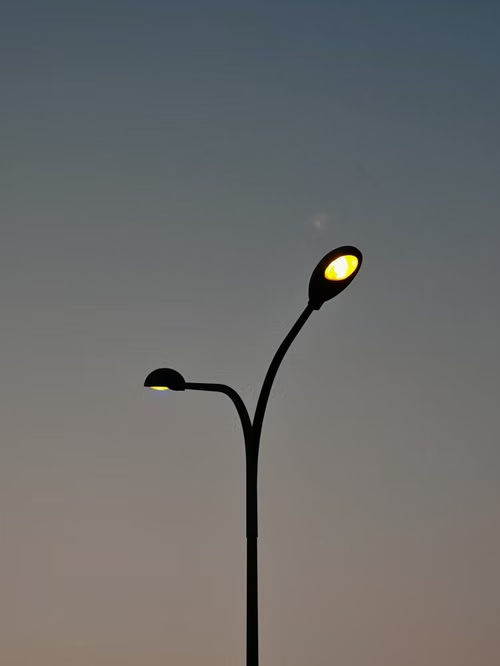
Light Poles for Outdoor Sports Fields: The Right Way to Choose
A sports field project rarely fails because a fixture was too dim. It fails because the pole underneath it was the wrong height, the wrong gauge, or the wrong material for the site conditions.
Choosing the right light poles for outdoor sports fields depends on matching footcandle requirements, mounting height, and pole material to your specific field type, not just picking a tall pole and a bright fixture.
In this article, you’ll learn how to choose the right light poles for outdoor sports fields based on footcandle requirements, mounting height, and pole material.
What Determines the Right Light Pole for a Sports Field
Every sports field carries a required light level, measured in footcandles, and that number shifts based on the sport and the level of play.
The Illuminating Engineering Society’s ANSI/IES RP-6 Recommended Practice for Sports and Recreational Area Lighting sets illuminance classes ranging from roughly 20 to 30 footcandles for recreational play up to 100 footcandles or more for college and professional competition.
The U.S. Department of Energy’s Illumination Standard for Occupational Work Areas reinforces why this range matters beyond comfort: adequate illumination is treated as a baseline safety requirement anywhere people are working or moving at speed, and a sports field with active play is no exception.
Under-lighting a competitive field creates a genuine safety issue for players tracking a fast-moving ball, while over-lighting a recreational field wastes energy and budget on brightness nobody needs.
Mounting height is just as important in this decision as footcandle output, favoring light poles for the outdoors.
The Lightmart Guide to Choosing the Right Lighting System for Outdoor Football Fields notes that standard pole heights typically range from 50 feet for training and recreational setups up to 90 feet or more for college and professional fields.
Going shorter than the field actually needs creates harsh shadows near the pole base, while going taller than necessary spreads light too thin across the playing surface and can spill glare onto neighboring property.
Material selection is where many buyers get stuck. Steel poles offer strong load capacity and remain a common choice for taller installations, though they need a protective coating to resist corrosion over years of outdoor exposure.
Aluminum poles weigh less and resist rust naturally without a coating, but they may need a thicker gauge to match the same wind load rating as a steel pole at an equivalent height. Neither material is automatically correct for every field.
The right choice depends on the site’s height requirement, local wind exposure, and how long the pole needs to perform without maintenance.
Choosing LED fixtures for these poles also carries a measurable efficiency case.
The U.S. Department of Energy’s LED Outdoor Area Lighting Fact Sheet compares photometric performance across outdoor luminaire types and confirms that LED fixtures consistently deliver higher efficacy than the legacy metal halide systems they typically replace on sports fields.
The Department of Energy’s Solid-State Lighting Program further estimates that solid-state lighting technology has the potential to cut U.S. lighting energy use by up to 75 percent by 2035, a trend that directly benefits large-draw outdoor installations like sports field lighting where fixtures run for extended hours.
What to Look for in a Sports Field Lighting Provider
Most guides available online explain footcandle levels in one place and pole specifications in another, leaving the buyer to connect the two decisions alone.
That gap is exactly where sports field lighting projects go wrong, because the footcandle target and the pole height and gauge are not separate choices. They form one decision that has to be made together, not two purchases handled in isolation.
Matching pole height, gauge, and fixture to your field and spending plan starts with the sport and play level, which confirms the required footcandle range for that specific use case.
From there, the mounting height needs to achieve that footcandle range without over-lighting the perimeter or leaving dark zones near the sidelines. Once height is set, the pole gauge and material need to support the fixture weight and the wind load rating at that exact height, not a generic estimate.
A provider who walks a buyer through all three factors together, rather than selling a pole and a fixture as two unrelated line items, solves the actual problem the buyer came in with instead of just filling an order.
A supplier that tests its own products before listing them for sale adds another layer of confidence to this process.
When a pole and fixture combination has already passed in-house testing for fit and performance, buyers spend less time second-guessing whether the parts they ordered will actually work together once they reach the field.
This kind of upfront verification also reduces the odds of a mismatched shipment arriving on site, which can delay an entire installation schedule.
Buyers evaluating outdoor light poles for sports fields should also confirm pole spacing early in the process.
According to the Lightmart Guide to Choosing the Right Lighting System for Outdoor Football Fields, common football field layouts use four, six, or eight poles positioned along the sidelines, with spacing generally falling between 50 and 100 feet depending on the field layout and seating configuration.
Getting this number wrong before poles are ordered can mean uneven light distribution across the field, even if the individual poles and fixtures are correctly specified.
General illumination guidance from OSHA’s Safe Lighting Practices publication also reinforces that minimum lighting levels should be verified across the entire active area, not just at a single measurement point, which applies directly to sideline-to-sideline coverage on a sports field.
The Department of Energy’s LED Adoption Report adds further context on why LED conversions are becoming standard for large-scale outdoor lighting projects, citing significant national electricity savings tied to LED adoption across commercial and public installations.
How Affordable Lighting Approaches Sports Field Pole Projects
Affordable Lighting provides project-specific guidance for outdoor sports field lighting using tested products, so sports field buyers are not left matching specifications on their own.
Buyers who are unsure which pole height, gauge, or fixture combination fits their field can use the Send Us Your List option to describe their project directly.
Rather than browsing a catalog and guessing which parts belong together, this option puts the specific field type, sport, and site conditions in front of someone who can match the right components before an order is placed.
That kind of direct back-and-forth turns a confusing spec sheet into a workable plan the buyer can act on with confidence.
Affordable Lighting is a family-founded LED lighting supply business, established in 1999, operating for over 25 years.
That kind of longevity in a single product category means the guidance offered on pole and fixture selection comes from years of handling exactly this type of project, not a general lighting catalog stretched thin across unrelated industries.
A buyer describing a football field, a baseball diamond, or a multi-use recreational field is working with a team that has seen the same decision points before.
Frequently Asked Questions
1. What footcandle level do most sports fields need?
Recreational fields generally need 20 to 30 footcandles; high school fields typically need 30 to 50 footcandles; and college or professional fields often require 100 footcandles or more, depending on the sport and governing body guidelines.
2. How tall should light poles for outdoor sports fields be?
Standard pole heights range from around 50 feet for recreational and training setups up to 90 feet or more for college and professional fields, with the exact height depending on field size and required light uniformity.
3. Is steel or aluminum better for outdoor sports field poles?
Steel poles generally handle higher wind loads at taller heights but need a protective coating, while aluminum resists corrosion naturally and weighs less, though it may require a thicker gauge for the same load rating.
4. What if I do not know which pole and fixture combination I need?
Submitting your project details through the Send Us Your List option lets you describe the field type and site conditions directly, so the right pole and fixture combination gets confirmed before you place an order.
5. Do all sports fields need the same pole spacing?
No. Pole spacing depends on field dimensions, the required footcandle uniformity, and the mounting height chosen, which is why matching all three factors together matters more than picking components separately.
Get the Right Setup the First Time
Choosing light poles for outdoor sports fields comes down to matching footcandle needs, mounting height, and pole material into one connected decision rather than three separate purchases made without reference to each other.
Skipping that connection is how projects end up with mismatched components or lighting that falls short of play-level requirements.
Submit your project details through the Send Us Your List option to Affordable Lighting and get a pole and fixture combination confirmed for your specific field before you order.
About author


Add comment