

Solar vs. Wired LED Outdoor Lights: Which Is Right for Your Project
When you start comparing power options for exterior fixtures, you will notice the advice online rarely agrees. Some sources push solar as the automatic winner. Others insist wired systems are the only reliable choice for commercial sites.
The truth depends on your site layout, your budget timeline, and how many hours your lights run each night. This article breaks down the real trade-offs between solar-LED outdoor lights and wired LED fixtures so you can match the right power source to your specific project.
Solar LED outdoor lights work best when grid access is limited or costly to extend. Wired LED fixtures work best when you need consistent nightly output regardless of weather. The right solution depends on your site conditions, not on which option sounds more modern.
Quick Comparison: Solar vs. Wired LED Outdoor Lights
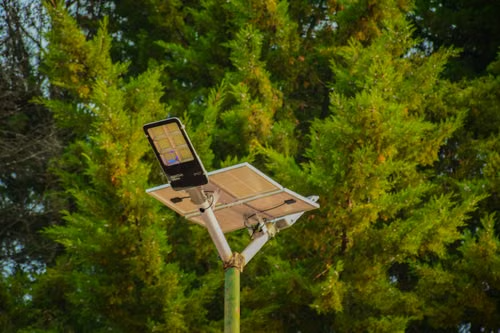
Both options deliver energy-efficient LED performance, but they differ sharply in installation, cost timing, and reliability under real-world conditions.
| Criteria | Solar LED Outdoor Lights | Wired LED Outdoor Lights |
| Installation method | No trenching or grid connection required | Requires trenching or conduit to a power source |
| Upfront cost | Higher per-fixture cost, no electrician labor | Lower fixture cost, higher labor and material cost |
| Weather dependency | Battery output varies with sunlight exposure | Consistent output regardless of weather |
| Maintenance | Battery replacement over time | Minimal, tied to fixture lifespan |
| Best-fit environment | Remote lots, perimeters, new installations | High-traffic sites with existing power infrastructure |
| Long-term energy cost | Near zero after installation | Ongoing utility cost, offset by LED efficiency |
What Solar LED Outdoor Lights Do Best
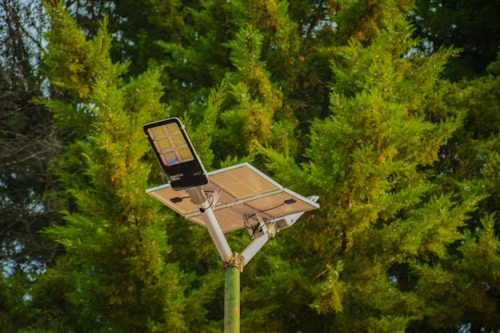
Solar LED outdoor lights remove the biggest cost driver in many exterior lighting projects: the price of running power to a fixture that sits far from a building or panel.
For parking lot perimeters, remote sports field entrances, or new construction where trenching would add significant expense, solar eliminates that line item entirely. You install the pole and mount the fixture, and the panel handles the rest.
According to the U.S. Department of Energy, solar-powered street and area lighting is most practical where grid connection is expensive and sunlight is sufficient to recharge batteries daily.
Affordable Lighting approaches each lighting project individually, as it says on its own website: established in 1999 and operating for over 25 years.
That history shapes how solar fixture recommendations get made, since every site is treated as its own project rather than a standard template.
Battery performance is the one honest limitation to flag here. Solar output depends on sunlight exposure, so heavily shaded sites or regions with long overcast stretches may see reduced nightly runtime compared to a wired equivalent.
This is not a reason to avoid solar outright, but it is worth confirming before you commit to a fixture for a shaded or northern-facing location.
What Wired LED Outdoor Lighting Offers
Wired LED outdoor lights connect directly to your existing electrical grid. They deliver consistent nightly output regardless of season, cloud cover, or sun exposure, which makes them dependable for sites with heavy nighttime usage.
According to the U.S. Department of Energy, well-designed LED outdoor luminaires use less energy, improve lighting uniformity, and can deliver payback in as little as three years.
Installation typically costs more upfront because it requires trenching, conduit, and electrician labor, especially over longer distances from the power source. For sites already wired for power, extending an existing circuit is often more straightforward than a standalone solar installation.
The Key Differences That Matter for Your Project
The real decision for solar led outdoor lights comes down to two factors: how far your fixture sits from a power source and how predictable your nightly output needs to be.
The availability of grid power significantly affects installation costs. Yes, wired systems cost less per fixture, but that lower sticker price often gets offset by trenching and labor costs once you factor in distance from the power source. A site 50 feet from a panel behaves very differently than one at the far end of a five-acre lot.
According to the EPA, the ENERGY STAR program has spent more than 25 years promoting energy-efficient lighting across residential and commercial properties, highlighting the long-term value of efficient outdoor lighting investments.
The DOE Solid-State Lighting Program continues to publish reports, roadmaps, and market studies that set the technical standards LED manufacturers work toward today.
Outdoor lighting conversions frequently face obstacles ranging from technical limitations to policy and permitting issues that can affect which fixture type fits a given site, notes the DOE Better Buildings Outdoor Lighting Challenges and Solution Pathways report.
The Better Buildings Outdoor Lighting Accelerator Key Accomplishments report confirms that public and private property owners nationwide continue evaluating solar options specifically for lower demand or intermittent lighting needs.
Use case-specific costs are where most published guidance falls short. A parking lot with dusk-to-dawn usage, a sports field lit only during evening events, and an industrial building with security lighting all carry different cost-per-year profiles for solar versus wired setups.
No single published cost figure applies evenly across all three. If your project falls into one of these categories, the right comparison is specific to that use case, not a generic solar versus grid average pulled from unrelated contexts.
Which Option Is Best for You?
Wired LED outdoor lights: Facility managers running industrial buildings or parking lots with existing electrical infrastructure and high nightly usage demands who want consistent, weather-independent output every night.
Solar LED outdoor lights: Property managers and project planners lighting remote lot perimeters, new sports field additions, or public space walkways where extending grid power would add significant cost or is not practical.
Frequently Asked Questions
Q1. Do solar LED outdoor lights work in cloudy or shaded areas?
Solar LED outdoor lights can still function in cloudy or partially shaded areas, but battery runtime may be reduced compared to full sun locations. Confirming panel placement and expected sunlight exposure before installation helps avoid underperformance in low-light conditions.
Q2. How much does it cost to install wired LED outdoor lighting compared to solar?
Wired LED outdoor lighting typically costs less per fixture but more in labor, since it requires trenching and electrical work to connect to a power source. Solar LED outdoor lights cost more upfront per fixture but eliminate trenching and ongoing utility expense entirely.
Q3. Are solar LED outdoor lights tested before being sold?
At Affordable Lighting, all products are tested by an in-house team of skilled professionals before being listed for sale. This applies to solar and wired LED fixtures alike, so buyers can confirm performance standards before a product ever reaches a project site.
Q4. Can I mix solar and wired LED lights on the same property?
Yes, many commercial properties use wired fixtures in high-traffic core areas and solar fixtures at remote perimeters or entrances where trenching is impractical. This hybrid approach lets you match the power source to each fixture’s specific location rather than forcing one system across the entire site.
Q5. Which option lasts longer, solar or wired LED fixtures?
Both solar and wired LED fixtures share the same LED lifespan, since the light source itself does not change between the two power methods. The difference in long-term maintenance comes down to battery replacement for solar systems versus electrical component upkeep for wired systems.
Making the Right Call for Your Project
Solar-LED outdoor lights and wired LED fixtures both deliver reliable, energy-efficient performance, but the right choice depends on your site’s power access, usage pattern, and budget timeline rather than a one-size-fits-all recommendation.
If you are still unsure which setup fits your parking lot, sports field, or industrial building, send your project details to Affordable Lighting‘s team for individual guidance before you order. Request a consultation today to get the right fixture matched to your specific site.
About author

Add comment