

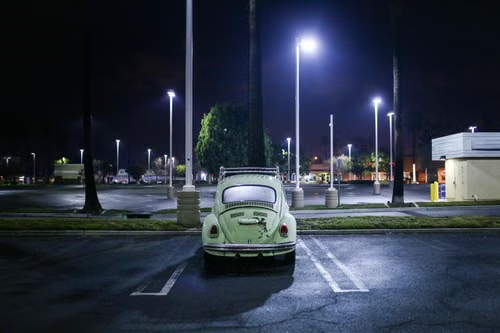
5 Best LED Parking Lot Lights With Photocell for Dusk-to-Dawn Operation
One property manager installs a photocell-equipped LED fixture and never touches a light switch again. Another sticks with a timer that can drift out of sync, leaving the lot dark at dusk or lit during the day. The difference comes down to one small sensor and the fixture built around it.
This article compares five LED parking lot lights with photocell control so you can match the right fixture to your lot size, voltage, and installation requirements before you buy.
The U.S. Department of Energy reports that outdoor lighting contributed 40 percent of total energy savings from LED adoption in 2018, making the outdoor sector one of the biggest opportunities for cost reduction.
A photocell-equipped LED parking lot light senses ambient daylight and switches automatically. The fixtures below differ mainly in wattage, mounting style, and power source.
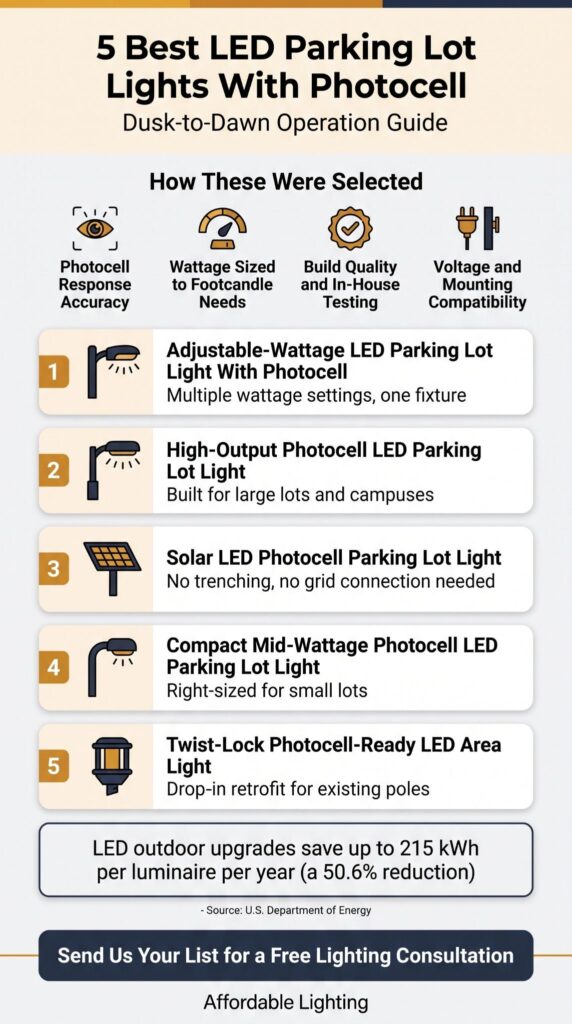
How These Were Selected
Four factors determined which fixtures made this list: photocell response accuracy, wattage matched to real footcandle needs, build quality, and mounting compatibility.
Photocell Response Accuracy
Every LED parking lot light with a photocell uses a sensor that reads ambient daylight rather than its own light output, which helps prevent the flicker-on, flicker-off cycle poorly placed sensors can cause.
ENERGY STAR’s outdoor lighting fixture specification requires an integrated daylight-threshold sensor that automatically prevents fixture operation during daylight hours, which sets the baseline every photocell fixture on this list must meet.
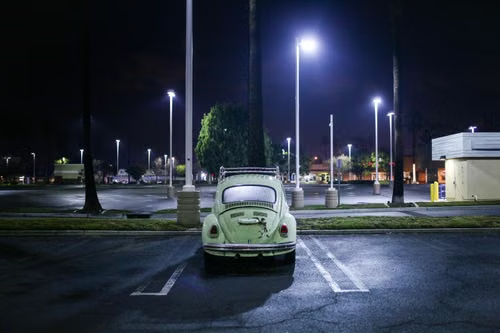
Energy Savings You Can Expect
The U.S. Department of Energy’s LED Outdoor Area Lighting Fact Sheet reports energy savings of up to 215 kWh per luminaire per year, or a 50.6 percent reduction, when replacing legacy fixtures with LED units on dusk-to-dawn control.
Why Reliable Lighting Supports Safety
A U.S. Department of Justice-funded review published by the Office of Justice Programs found that improved outdoor lighting significantly reduces crime in public spaces, reinforcing why consistent dusk-to-dawn coverage matters for parking lots, not just energy costs.
Build Quality and In-House Testing
Affordable Lighting is a family-founded LED lighting supply business established in 1999 and operating for over 25 years. All products are tested by an in-house team of skilled professionals before being listed for sale.
Voltage and Mounting Compatibility
Each fixture below notes its typical mounting and voltage needs, since matching these details to your existing pole or panel avoids costly install delays.
1. Adjustable-Wattage LED Parking Lot Lights With Photocell
This fixture lets you select from multiple wattage settings on one unit, so a single product covers several lot sizes without ordering separate models. The built-in photocell activates the light automatically at dusk and shuts it off at dawn, eliminating manual scheduling.
What It Is and What It Does
The fixture pairs a dimmable LED engine with a factory-installed photocell. Installers can adjust output in the field to match the wattage a specific area requires.
Best For: Matching Output to Your Lot Size
An adjustable-wattage fixture lets a facility manager adjust output to fit the ANSI/IES RP-20-14 recommendations for a specific lot instead of guessing with a fixed-wattage model.
One Honest Trade-Off
Adjustable-wattage fixtures typically cost more upfront than single-wattage models, so a small lot with consistent size and activity levels may not need this flexibility.
2. High-Output Photocell LED Parking Lot Light for Large Lots
Large lots, campuses, and distribution centers need higher lumen output spread across a wide area with fewer poles.
What It Is and What It Does
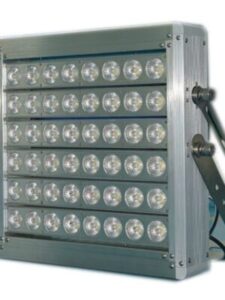
This fixture delivers a high-lumen output, typically in the 300-watt-equivalent range, paired with a photocell for automatic dusk-to-dawn switching across a large area.
Best For
Facility managers covering large open lots, industrial yards, or multi-acre commercial sites who need fewer poles spaced farther apart.
One Honest Trade-Off
Higher-output fixtures draw more power per unit, so total energy savings depend on pole count and spacing, not the fixture alone.
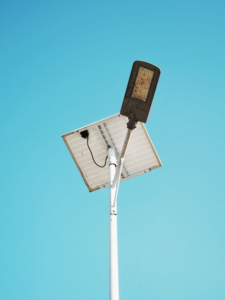
3. Solar LED Photocell Parking Lot Light
Solar fixtures combine a photocell with an integrated solar panel and battery, removing the need for a trenched electrical connection.
What It Is and What It Does
The photocell activates the LED at dusk using stored solar energy. The panel recharges the battery automatically during daylight hours.
Best For
Sites without easy access to grid power, remote lots, or properties looking to reduce electrical installation costs.
One Honest Trade-Off
Solar output depends on sunlight availability and battery capacity, so northern climates or heavily shaded lots may experience reduced runtime during winter months.
4. Compact Mid-Wattage Photocell LED Parking Lot Light for Small Lots
Smaller retail lots, driveways, and neighborhood parking areas rarely need the output of a large commercial fixture.
What It Is and What It Does
This fixture pairs a lower-wattage LED engine, typically in the 100-to-150-watt range, with a standard photocell for smaller paved areas. All products are tested by an in-house team of skilled professionals before being listed for sale.
Best For
Small business lots, church parking areas, or residential-adjacent commercial spaces that need reliable dusk-to-dawn light without industrial-scale output.
One Honest Trade-Off
A compact fixture will not provide adequate coverage for a large lot, so pairing wattage to square footage matters more here than on a flexible model.
5. Twist-Lock Photocell-Ready LED Area Light for Retrofit Projects
Retrofit projects often reuse existing poles, which means the new fixture needs to match the existing photocell receptacle.
What It Is and What It Does
This fixture includes a standard twist-lock photocell receptacle. Installers can replace an aging HID or metal halide fixture with an LED unit without replacing the pole or the control wiring.
Best For
Property owners replacing older fixtures on existing poles who want to keep installation costs and downtime low.
One Honest Trade-Off
Twist-lock compatibility depends on matching the receptacle type and voltage to the existing pole wiring, so confirming specifications before ordering avoids a mismatched fit.
Frequently Asked Questions
Q1. Does a photocell turn LED parking lot lights on automatically at dusk?
Yes. A photocell senses falling ambient light levels at dusk and turns the fixture on, then shuts it off when daylight returns. This allows the light to operate automatically without a timer or manual switch.
Q2. What wattage do I need for a photocell LED parking lot light?
Wattage depends on lot size, pole height, spacing, and the required light level.
The ANSI/IES RP-20-14 standard for parking facility lighting sets footcandle targets by lot activity level rather than a single number, so confirming your layout against that guidance before ordering helps avoid both under-lighting and an oversized fixture.
Q3. Can I add a photocell to an existing LED parking lot light?
Some fixtures accept an add-on photocell through a twist-lock receptacle, while others require a factory-installed sensor. Checking the receptacle type on your current pole wiring first confirms which retrofit option fits your setup.
Q4. Do solar LED parking lot lights work as well as wired photocell fixtures?
Solar fixtures work reliably in most climates but depend on daily sunlight exposure to recharge the battery for nighttime operation. Lots with heavy tree cover or limited winter daylight may see reduced runtime compared to a wired photocell fixture.
Q5. Why is my photocell LED parking lot light staying on during the day?
A stuck or miswired photocell sensor, or a sensor exposed to artificial light at night, can cause the fixture to stay on continuously. Confirming the sensor is aimed away from the fixture’s own light source usually resolves this issue.
Final Thoughts
Matching wattage, mounting type, and power source to your specific lot size prevents both wasted energy and inadequate lighting coverage.
The U.S. Department of Energy’s Solid-State Lighting Forecast Report projects that LED lighting savings will top 569 terawatt-hours annually by 2035, highlighting the continued energy-saving potential of LED applications such as parking lot lighting.
Whether you need an adjustable-wattage fixture for a mixed-use lot, a solar option for a remote site, or a twist-lock retrofit for an aging pole, confirming the right specifications before you order saves time and cost later.
Send us your project details, and Affordable Lighting will help you match the right LED parking lot lights with photocell control to your property.
About author

Add comment